


One run behind at the end of day two would normally sound manageable. But with Australia on 330 for four and two established batters returning tomorrow, South Africa will know that the scoreboard tells only part of the story.
The visitors have six wickets available, the first-innings deficit is gone, and the Proteas need a way through Josh Inglis and Alex Carey. Their unbeaten partnership of 145 has put Australia in the stronger position in this final Test at Newlands. Inglis finished on 85, with Carey on 51.
For South African supporters, the frustration is that there were openings. Twice, the bowling produced the sort of breakthroughs that can change a day. Twice, Australia found another partnership.
In a series decider, those missed chances to take control can become expensive.
Harmer gives South Africa an opening

Travis Head contributed 41 before Simon Harmer bowled him with his first delivery of the match. Harmer then removed Marnus Labuschagne for a duck, with Aiden Markram taking the catch at slip.
That was an encouraging intervention from the spinner. Head is a batter a fielding side wants back in the pavilion early, while a wicket without another run against the dismissed batter’s name always gives the bowling side a lift.
At that point, South Africa had something to work with. The challenge was to keep the next pair under pressure long enough to make those wickets count.
Renshaw and Green make the bowlers start again
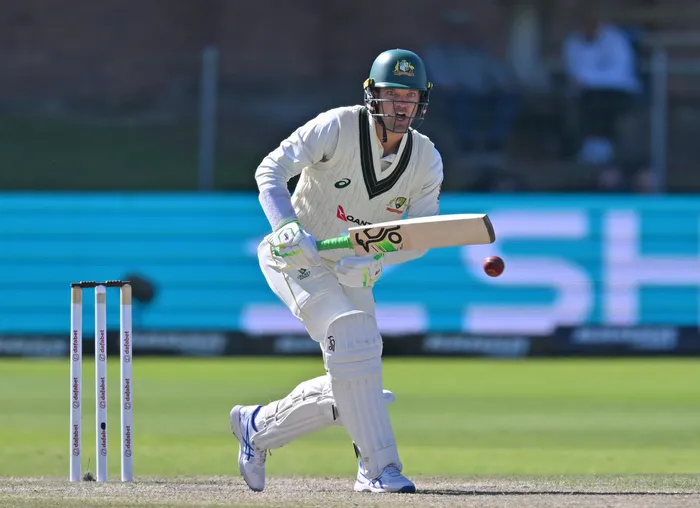
Matt Renshaw and Cameron Green answered with a third-wicket partnership of 126. Renshaw made 74 and Green 65, giving Australia two substantial contributions when the innings needed settling.
Neither went on to a hundred, but from South Africa’s perspective, that offers limited comfort. A partnership like that makes the bowlers work through another long passage, takes runs off the deficit and gives the incoming batters a better platform.
This is where Test cricket can be particularly demanding. A good spell earns a breakthrough, everyone feels the game shifting, and then the next pair makes you begin the whole process again.
For me, that was the recurring problem for the Proteas. They could interrupt Australia’s progress. They could not keep the innings under pressure for long enough afterwards.
Jansen brings another chance — and a milestone
Marco Jansen gave South Africa a second opening by dismissing both Renshaw and Green. Renshaw’s wicket also brought up Jansen’s 100th Test wicket, a milestone worth recognising even on a difficult day for the team.
His burst helped leave Australia at 185 for four. Jansen finished the day with figures of two for 37 from 14 overs, including four maidens. Those were valuable returns in an innings that had otherwise become hard work for the hosts.
At 185 for four, South Africa still had the chance to secure a useful first-innings advantage. Another wicket would have brought a new batter into a very different situation.
That is why what followed will bother the Proteas most.

Inglis and Carey leave the job unfinished
Inglis and Carey took Australia from that vulnerable position to a lead without another wicket falling. Their stand ensured that Jansen’s double breakthrough did not become the start of a collapse.
The concern now is what that partnership could still become. South Africa will start day three bowling at two players who have already spent considerable time at the crease. There is no settling-in period to exploit unless the bowlers can create one through their accuracy.
From Australia’s side, the task is straightforward: keep batting and make South Africa’s next innings more difficult before it has even begun.
For the Proteas, every additional run conceded now increases the work their batters will eventually have to do.
What South Africa need on day three
The first requirement is a breakthrough. But the lesson from day two is that one wicket, or even two close together, will not be enough on its own.
South Africa need to follow a successful spell with another disciplined one. They need to make a new batter work for those first few runs and avoid allowing the innings to settle again.
There is also a balance for Temba Bavuma to find. Attacking fields are necessary when wickets matter this much, but loose bowling can quickly make those fields costly. The bowlers and captain need to keep working towards the same dismissal rather than letting frustration dictate the next change.
There is no need to treat the opening half-hour as though the entire Test must be won in it. There is, however, a need for urgency. Australia have earned the opportunity to build a substantial lead, and South Africa cannot afford to let that opportunity become an easy morning.
This match is still within reach. But after spending day two chasing partnerships, the Proteas need to make Australia chase answers.
A one-run lead can be wiped away with a single. Six remaining wickets take rather more work.

Author: swoosh0018
Explore • Eat • Travel • Discover Football & Sports Obcessed South Africa | Worldwide 🌎 Living Life Beyond the Ordinary Blog Thats Simply Sublimevel