

Some World Cups give us champions. Mexico 1970 gave us something to dream about.
A yellow shirt flashing across green grass. A goalkeeper reaching beyond belief. A ball rolling into space, waiting for a defender arriving at full speed.
More than half a century later, those images still breathe.
Mexico 1970 survives because its greatest moments reward another look. Watch the movement. Notice the nerve. Follow the pass you missed the first time.
Then try not to smile.
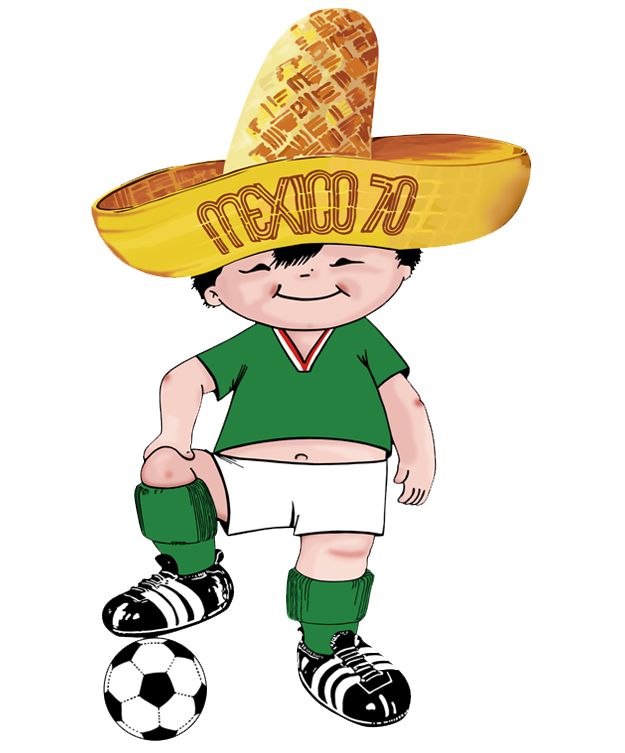
Mexico supplied the stage. Football supplied the electricity. But first here is Juanito. The Official Mascot of Mexico 1970
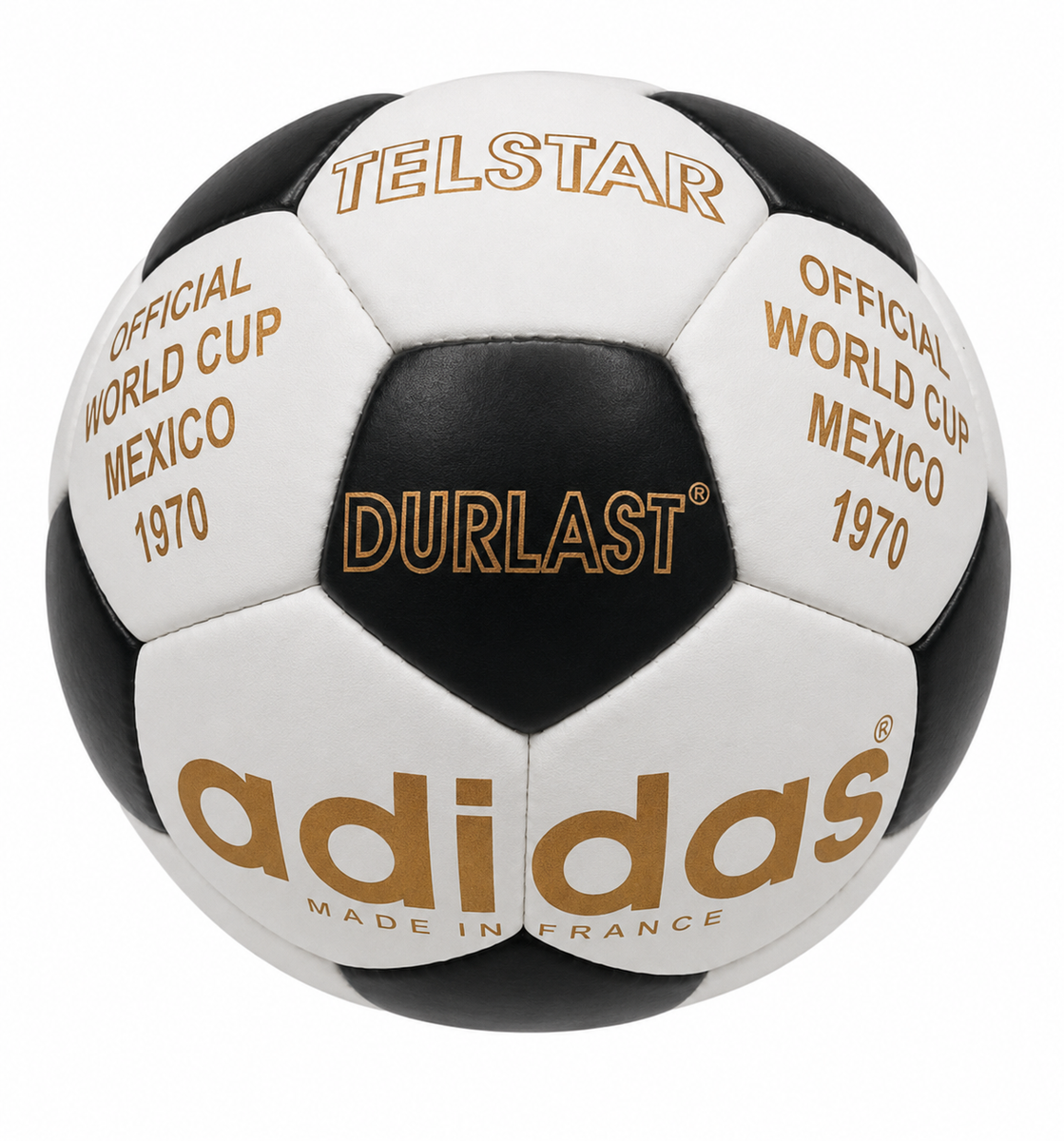
And then The Adidas Telstar. The Official Ball of Mexico 1970
Under the Mexican sun, the game demanded skill, stamina and clear heads. The hosts gave their supporters a run to the quarter-finals before Italy ended their campaign. Elsewhere, Brazil swept past Peru and Uruguay on the way to the final. A tournament full of possibility was gathering towards an extraordinary finish.
And at its centre stood a team in yellow.
Brazil made the difficult look irresistible
Pelé. Jairzinho. Gérson. Rivellino. Tostão.
Even written down, the names seem to move.
Brazil’s brilliance came from the way those talents worked together. Players exchanged positions, made space and trusted the next man to see the opportunity. Their football had imagination, but also purpose. Every beautiful touch could become a threat.
Pelé drew the eye, yet danger arrived from everywhere. Jairzinho scored in every one of Brazil’s six matches, including the final—a remarkable thread of consistency running through a team celebrated for its invention.
Against that attacking force, even a save could become immortal.
The hand that interrupted history
Against England, Pelé drove a downward header towards goal.
Gordon Banks somehow got across, reached low and turned the bouncing ball over the crossbar. What looked destined to become another Pelé highlight became a monument to goalkeeping instead.
Watch it today. The surprise still works.
For a fraction of a second, the goal seems inevitable. Then Banks intervenes, and certainty disappears.
That was Mexico 1970: even the moments that denied greatness could become great themselves.
Then came a match that refused to end quietly
Italy against West Germany. A place in the final at stake.
Their semi-final reached extra time at 1–1. What followed was an eruption: five more goals, shifting leads and exhaustion stretched to its limit. Italy finally emerged with a 4–3 victory from the encounter remembered as the “Game of the Century.”
The score tells you it was dramatic. It cannot tell you what it felt like to watch the balance change again and again.
Italy had survived a footballing storm.
Brazil awaited.
The final became a canvas
On 21 June, at Mexico City’s Estadio Azteca, Brazil and Italy met for the title.
Pelé opened the scoring with a towering header. Roberto Boninsegna equalised, leaving the match level at half-time. After the interval, Gérson and Jairzinho put Brazil in control.
Then came Carlos Alberto. Brazil’s captain scored the fourth, completing a 4–1 victory.
Calling it a finish hardly does the move justice.
Brazil carried the ball forward through a flowing sequence of passes. Pelé received it near the penalty area and slipped it into the space on his right. Carlos Alberto arrived and struck.
The beauty lay in the timing: the patience before the acceleration, the invitation of the pass, the violence of the shot. A right-back had surged forward to deliver the final flourish of a collective masterpiece.
Why the magic remains
That victory gave Pelé his third World Cup title. His place in football history was already secure; Mexico supplied an unforgettable final chapter to his World Cup career.
But the tournament’s appeal reaches beyond medals.
It lives in the courage to attempt something extraordinary. In Banks refusing to surrender a lost cause. In Italy and West Germany finding another goal when their legs could scarcely find another step. In Brazilian players trusting movement, touch and one another.
Football has grown faster. The pictures have grown sharper.
Yet those yellow shirts still pull us closer to the screen.
Mexico 1970 left us with a ball rolling into open space—and the thrilling certainty that someone was coming.
Yes—add this section to your blog. It covers all 32 matches, from the opening game to Brazil’s triumph. Results checked against the RSSSF tournament record. rsssf.org
1970 World Cup in Mexico: All Fixtures and Results
The tournament ran from 31 May to 21 June 1970. Sixteen teams competed in four groups, with the top two from each group advancing directly to the quarter-finals.
Group 1
| Date | Fixture | Result |
|---|---|---|
| 31 May | Soviet Union vs Mexico | 0–0 |
| 3 June | Belgium vs El Salvador | 3–0 |
| 6 June | Soviet Union vs Belgium | 4–1 |
| 7 June | Mexico vs El Salvador | 4–0 |
| 10 June | Soviet Union vs El Salvador | 2–0 |
| 11 June | Mexico vs Belgium | 1–0 |
Qualified: Soviet Union and Mexico. The hosts advanced unbeaten without conceding a goal.
Group 2
| Date | Fixture | Result |
|---|---|---|
| 2 June | Uruguay vs Israel | 2–0 |
| 3 June | Italy vs Sweden | 1–0 |
| 6 June | Uruguay vs Italy | 0–0 |
| 7 June | Sweden vs Israel | 1–1 |
| 10 June | Uruguay vs Sweden | 0–1 |
| 11 June | Italy vs Israel | 0–0 |
Qualified: Italy and Uruguay. Italy topped the group despite scoring just once.
Group 3
| Date | Fixture | Result |
|---|---|---|
| 2 June | Romania vs England | 0–1 |
| 3 June | Czechoslovakia vs Brazil | 1–4 |
| 6 June | Romania vs Czechoslovakia | 2–1 |
| 7 June | England vs Brazil | 0–1 |
| 10 June | Romania vs Brazil | 2–3 |
| 11 June | England vs Czechoslovakia | 1–0 |
Qualified: Brazil and England. Brazil won all three matches, including their showdown with the defending champions.
Group 4
| Date | Fixture | Result |
|---|---|---|
| 2 June | Peru vs Bulgaria | 3–2 |
| 3 June | Morocco vs West Germany | 1–2 |
| 6 June | Peru vs Morocco | 3–0 |
| 7 June | Bulgaria vs West Germany | 2–5 |
| 10 June | Peru vs West Germany | 1–3 |
| 11 June | Bulgaria vs Morocco | 1–1 |
Qualified: West Germany and Peru. West Germany swept through the group with three wins and ten goals.
Quarter-finals
| Date | Fixture | Result |
|---|---|---|
| 14 June | Soviet Union vs Uruguay | 0–1 after extra time |
| 14 June | Italy vs Mexico | 4–1 |
| 14 June | Brazil vs Peru | 4–2 |
| 14 June | West Germany vs England | 3–2 after extra time |
England’s title defence ended, Mexico’s adventure was over, and Brazil moved closer to glory.
Semi-finals
| Date | Fixture | Result |
|---|---|---|
| 17 June | Italy vs West Germany | 4–3 after extra time |
| 17 June | Brazil vs Uruguay | 3–1 |
Italy survived the unforgettable “Game of the Century”, while Brazil secured their place in the final.
Third-place match
| Date | Fixture | Result |
|---|---|---|
| 20 June | West Germany vs Uruguay | 1–0 |
Final
| Date | Fixture | Result |
|---|---|---|
| 21 June | Brazil vs Italy | 4–1 |
Brazil’s scorers: Pelé, Gérson, Jairzinho and Carlos Alberto.
Italy’s scorer: Roberto Boninsegna.
Brazil finished as champions, Italy as runners-up and West Germany in third place. Gerd Müller was the tournament’s leading scorer with ten goals.
Six matches. Six Brazilian victories. One unforgettable team.

Author: swoosh0018
Explore • Eat • Travel • Discover Football & Sports Obcessed South Africa | Worldwide 🌎 Living Life Beyond the Ordinary Blog Thats Simply Sublimevel