
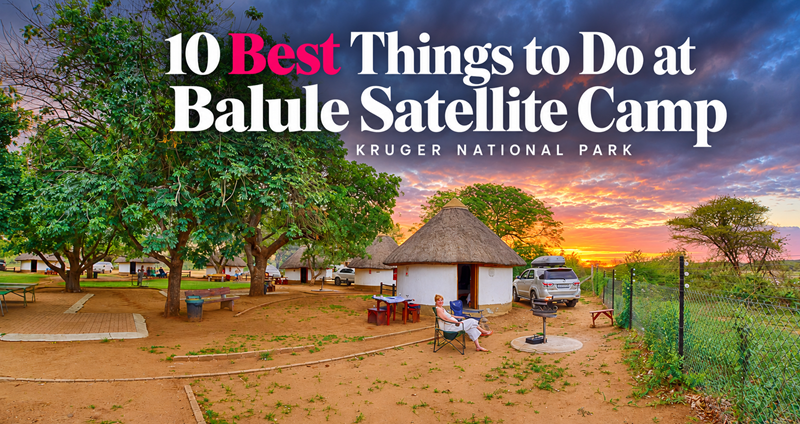
10 Best Things to Do at Balule Satellite Camp in Kruger National Park
At Balule, the evening’s entertainment might begin with the sound of something moving beyond the fence. Conversation pauses. Someone reaches for a torch. For a moment, supper can wait.
That sense of anticipation is part of the appeal of this small camp near the Olifants River in Kruger National Park. Balule has no electricity, shop or restaurant. Its facilities are basic, and its pleasures ask for little more than time, curiosity and a willingness to live comfortably with less.
For visitors who enjoy simple surroundings, this is an inviting place to settle into the bush. The best things to do at Balule Satellite Camp include exploring the surrounding roads, spending time at nearby Olifants and making the most of the hours between drives.
1. Take an Unhurried Early-Morning Game Drive
Prepare your flask the night before and be ready when the camp gates open. Rather than planning an ambitious route, give the surrounding area a proper look.
Drive slowly. Scan beneath trees, examine distant shapes and stop occasionally where visibility allows. A quiet stretch of road deserves attention even when no other vehicles have gathered there.
An early drive is also a chance to enjoy the landscape before the day becomes busy. The light changes, birds become active and each bend offers a fresh view. Let the morning develop without measuring its success by the number of predators you find.
2. Explore the Olifants River Area
Balule’s position close to the Olifants River makes the surrounding river country a natural focus for a stay.
Use open public roads and designated viewing places to study the landscape. Look along the banks, across exposed sand and into the shade of riverside vegetation. Binoculars help turn a distant outline into something worth watching.
Give yourself time to observe behaviour. An animal feeding, resting or choosing where to cross can be far more absorbing than a quick photograph suggests. Stay in your vehicle except where signs expressly permit you to get out.
3. Visit Olifants Rest Camp for the View
Include a visit to nearby Olifants Rest Camp, where lookout platforms offer elevated views over the river. The change in perspective is a highlight: after searching for wildlife at road level, you can appreciate the breadth of the river landscape from above.
Take binoculars and linger. Follow the river’s course, study the vegetation and look for movement below. Even when the animals are distant, the setting gives you plenty to absorb.
Allow enough time to return to Balule before gate closing, particularly if sightings slow the journey.
4. Arrange a Guided Bush Walk Through Olifants
A bush walk adds a different dimension to a Kruger visit. Once you are on foot with a guide, smaller details begin to carry more weight: a footprint, a plant, a mark in the soil.
Ask questions and let the guide’s knowledge shape the experience. There is considerable satisfaction in understanding a little more of what you have been driving past.
Balule does not run its own activities. SANParks advises that guided walks can be pre-arranged through Olifants, so confirm availability, participation requirements and departure arrangements before making plans.
5. Book a Guided Game Drive
Self-driving gives you freedom; a guided drive brings another pair of trained eyes and a different interpretation of the bush.
Use the opportunity to ask about animal behaviour, habitats and the less familiar creatures that catch your attention. A good question can make an ordinary sighting unexpectedly memorable.
Guided game drives for Balule guests can be pre-arranged through Olifants. Confirm where the activity starts and ends, and how its timing works with access to your accommodation.
6. Make Birdwatching Part of Every Day
Keep your binoculars within reach instead of packing them away after each drive. Try a short, deliberate birdwatching session from a suitable spot inside camp, or give birds your full attention during a roadside stop.
Watch how they move and feed before reaching for a field guide. Shape, posture and behaviour often tell you as much as colour.
Around the river, broaden your search to include waterbirds. SANParks names the Goliath heron among the species to look for in the Balule area. Finding one would be a pleasure, but the search itself is reason enough to slow down.
7. Cook Supper Over the Coals
Bring ingredients for a meal you will enjoy preparing outdoors. Balule has braai facilities, making an evening around the coals an easy part of the experience.
Keep the menu manageable. A well-cooked supper, a comfortable chair and a conversation about the day’s discoveries need little embellishment.
As darkness settles, give the evening room to stretch. Put food away securely, keep wildlife at a distance and enjoy the small rituals of camp life: tending the fire, setting out plates and deciding whether anyone has room for another helping.
8. Spend an Evening Listening
After supper, sit quietly within camp and pay attention to sound.
An insect’s persistent rhythm, a bird calling from somewhere unseen or a rustle beyond the reach of your light can hold your attention surprisingly well. You may recognise some sounds immediately. Others can remain a mystery until morning.
Avoid filling every pause with conversation or music. Part of Balule’s appeal is the opportunity to hear what happens when people become quiet. Keep a torch handy when moving around camp, and enjoy wildlife from a respectful distance.
9. Look Up at the Night Sky
On a clear evening, find a comfortable place within camp, away from lantern glare where possible, and let your eyes adjust.
There is no need to identify every constellation. Begin with whatever you recognise, then take in the wider sky. If you use a stargazing app, lower the screen brightness so it does not dominate the experience.
This is an especially pleasant way to end a full day. After hours spent searching trees, grass and riverbanks, looking upwards offers a welcome change.
10. Give Yourself Time to Stay in Camp
Leave at least part of a day without a driving plan.
Read in a comfortable chair. Sort through photographs. Write down the details of a sighting while you still remember them. Watch the changing light and enjoy the practical rhythm of making tea or preparing lunch.
A stay at Balule offers a chance to become less hurried. You can explore enthusiastically and still leave time to enjoy the place you have chosen to sleep.
The lasting memories may be modest ones: the first sip of coffee before a drive, a bird you finally managed to identify, or an evening conversation interrupted by a sound in the darkness. Give those moments space. They are a good reason to come.
Planning Your Stay at Balule
Pack for self-catering and bring torches, spare batteries and a way to keep essential devices charged. SANParks lists a communal kitchen with gas stoves, washing-up facilities and a communal freezer. Check-in takes place at Olifants or Satara rather than at Balule, and day visitors are not permitted in the camp. Confirm your arrival instructions when booking.
Before travelling, check current camp availability, road access and seasonal gate times with SANParks. Arrange guided activities through Olifants in advance, and build enough flexibility into each day for the unexpected pleasures of Kruger.

Author: swoosh0018
Explore • Eat • Travel • Discover Football & Sports Obcessed South Africa | Worldwide 🌎 Living Life Beyond the Ordinary Blog Thats Simply Sublimevel