

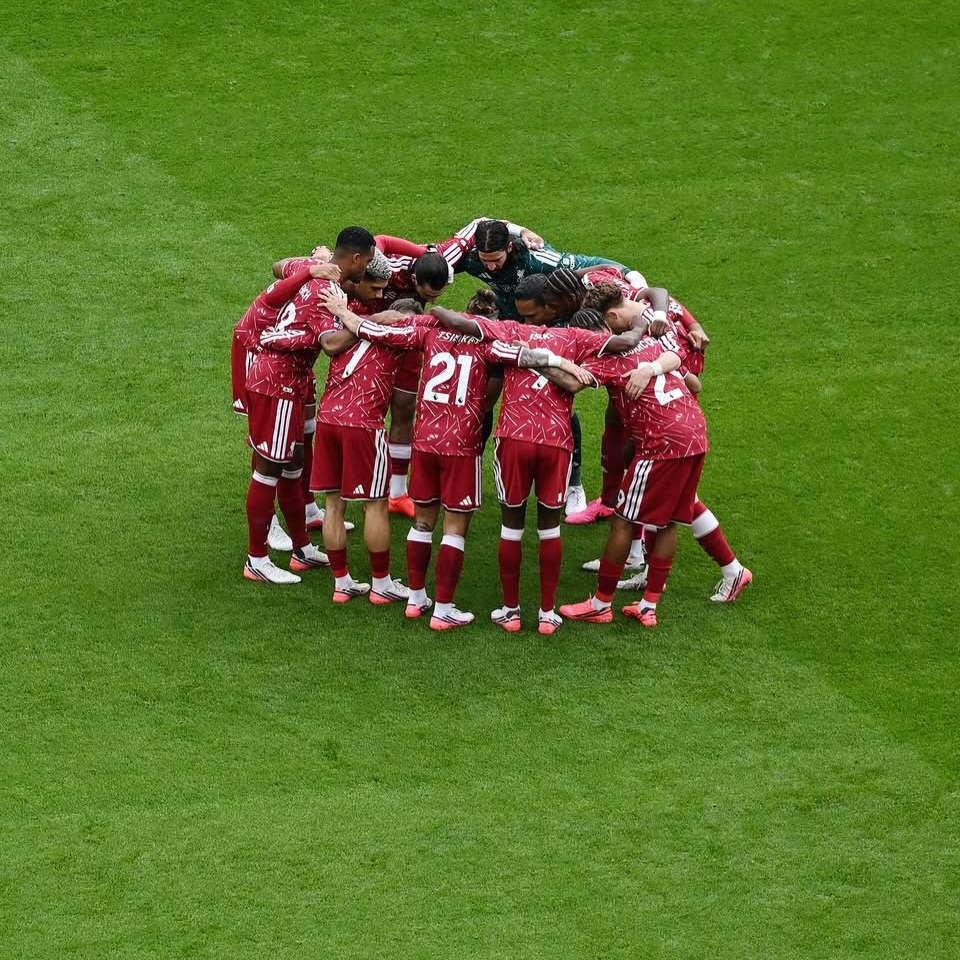
Liverpool 0–0 Fulham: Plenty of Talent, Precious Little Spark
Anfield waited for the explosion. It never came.
Liverpool had the expensive attackers, the home crowd and enough possession to suggest that eventually Fulham would crack. Instead, the afternoon slowly dissolved into frustration.
And perhaps more concerning than the two dropped points was how ordinary Liverpool looked while dropping them. This wasn’t a heroic defensive stand from Fulham against an irresistible red wave.
Fulham were comfortable for long periods. Liverpool simply couldn’t find the switch.
All the Weapons. No Ammunition. Look at Liverpool’s attacking personnel and a goalless afternoon feels almost absurd.
Alexander Isak. Florian Wirtz. Bradley Barcola. Victor Muñoz. There is speed. Technique. Movement. Individual brilliance.What Liverpool lacked was chemistry.
The combinations were slow, the spaces between the attackers often too large and Fulham rarely looked genuinely overwhelmed.
Isak finally registered Liverpool’s first open-play shot on target early in the second half. That statistic alone tells you plenty about the opening 45 minutes. Liverpool weren’t incapable of creating anything. Muñoz headed against the crossbar in the first half, while Wirtz also had an opportunity.
But isolated moments aren’t the same thing as sustained pressure. For a side with this much attacking talent, Liverpool spent far too much of the match looking like a collection of excellent footballers rather than an excellent attacking unit.
Fulham Didn’t Come to Survive,Give Fulham their credit.
They didn’t arrive at Anfield, park eleven players around Bernd Leno and pray. Álvaro Arbeloa’s team competed. Josh King caused problems. Fulham attacked space when Liverpool surrendered possession and created enough danger that the home side couldn’t simply commit everyone forward.
At one stage, Jérémy Jacquet was required to make a crucial goal-line clearance.That wasn’t supposed to be the story.
Fulham had entered the afternoon after three consecutive Premier League defeats. They left Anfield with their first point under Arbeloa—and deserved it. The Numbers Make It Worse
Liverpool finished with 56% possession, had a 14–10 advantage in shots and generated approximately 1.13 expected goals to Fulham’s 0.71.
They also created four big chances. They converted none.
Yet there is another statistic that captures the strange nature of the afternoon: Fulham actually recorded more touches inside Liverpool’s penalty area, 24 to 18.
That’s the uncomfortable part. Liverpool had territory.Liverpool had the ball.Liverpool didn’t have control.
There is a difference.
A Midfield That Never Took Command.The biggest concern wasn’t necessarily the finishing.
It was what happened behind the forwards.
Ryan Gravenberch and Dominik Szoboszlai struggled to impose themselves physically and rhythmically. Together, they reportedly won only five of 17 contested duels, with Gravenberch particularly ineffective in that department.
That matters because Iraola’s football requires more than simply circulating possession. Liverpool need to win the ball, accelerate and attack before the opposition can reorganise.
Against Fulham, too many possessions became predictable.
When Alexis Mac Allister entered after the hour mark, Liverpool gained more control, but by then Fulham had grown increasingly comfortable with the challenge.
Jérémy Jacquet: The Bright Spot.On an afternoon dominated by attacking disappointment, Liverpool’s outstanding performer was a defender.
Jérémy Jacquet was excellent.The 21-year-old produced the goal-line clearance that prevented Liverpool’s afternoon from becoming considerably worse, but his performance extended beyond emergency defending.
He was composed in possession, aggressive in duels and increasingly influential in Liverpool’s buildup. Sofascore rated him the best player on the pitch at 8.5, crediting him with eight duels won, five successful aerial duels and 76 completed passes from 88 attempts.
In a team searching for fluency, Jacquet looked remarkably certain of himself.Iraola Has a Puzzle to Solve
There is context.Liverpool had played Atlético Madrid in the Champions League only days earlier, and Iraola acknowledged afterwards that his attack lacked freshness.
Fair enough.But Liverpool will play European football and Premier League football in the same week repeatedly.
Fatigue explains the performance.It cannot become an excuse for repeating it.
Iraola is attempting to integrate new players and new combinations while imposing his own football on a squad still adapting to him.
That takes time.The problem is that Premier League title races aren’t famous for their patience.
Liverpool have now drawn three of their opening four league matches under Iraola. They remain unbeaten, but an unbeaten record can look considerably less impressive when victories are disappearing from it.
The Sublime Verdict
This wasn’t a disaster.
It was a warning.
Liverpool possess enough individual quality to produce spectacular football this season. Isak can score. Wirtz can unlock defences. Barcola can destroy space. Mac Allister can dictate matches.
But names don’t create chemistry.Reputations don’t create tempo.
And possession doesn’t automatically create danger.Fulham came to Anfield with a plan, trusted it and earned their point.Liverpool had more talent.
Fulham looked more like a team.For Iraola, that’s the part that should sting.
Liverpool didn’t lose at Anfield.
But by the final whistle, Fulham were the ones who looked happier with what they’d found.
Chelsea who I backed Fantasy wise drew 2-2 with HULL. Rogers and Pedro keep scoring. Xabi Alonso feeling a tad bit uncomfortable.
Forest beat Villa 2-1 and fantastic win for Ispwich as they beat Crystal Palace in a Thriller 3-2